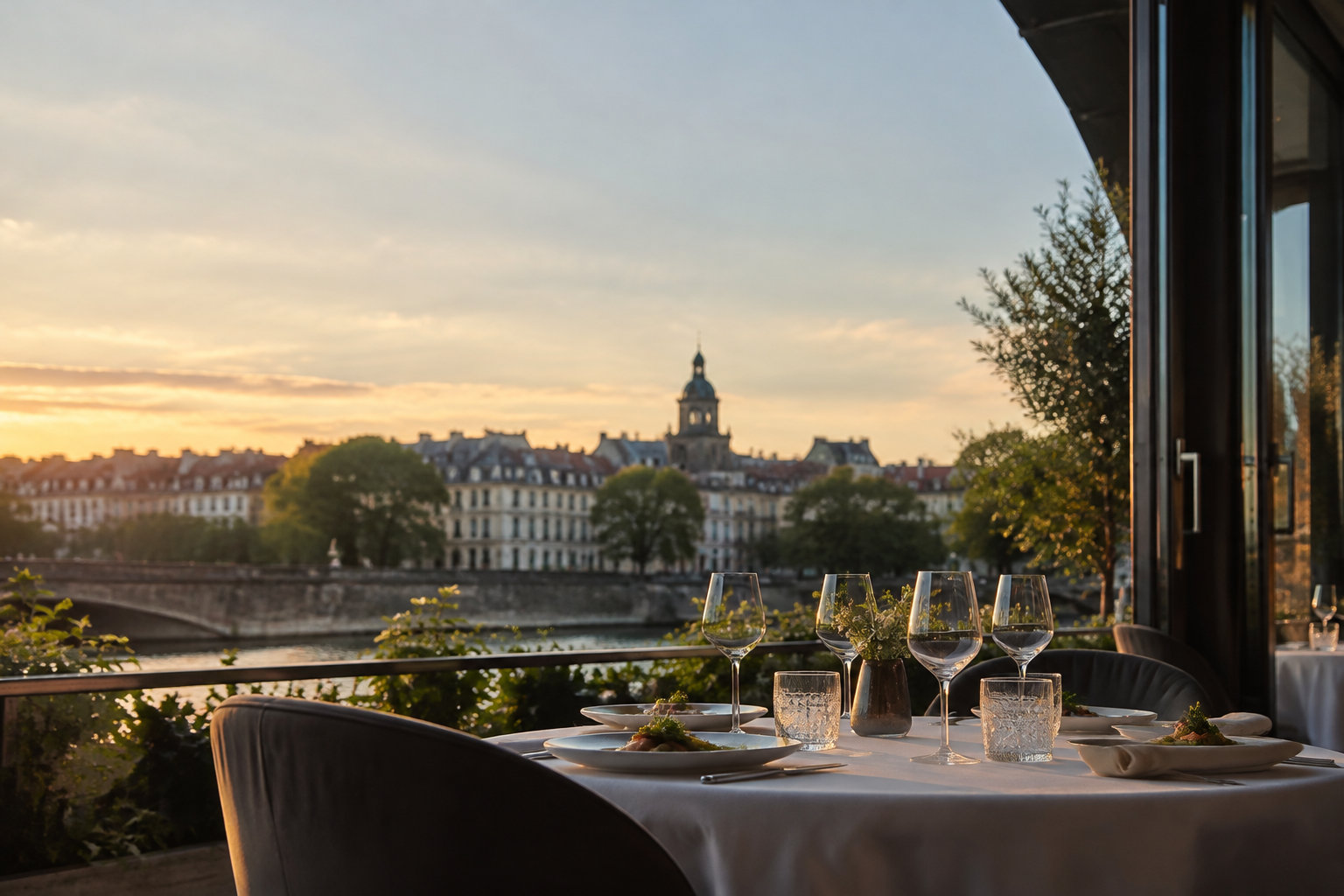
Les restaurants étoilés de Rennes n’ont pas du tout le même style. Entre la créativité, le produit breton et le grand dîner, difficile de choisir.
On fait le tour de chaque adresse, avec ce qu’elle sert et ce qu’elle coûte vraiment.
Quelle table étoilée choisir selon votre envie et votre budget ?
Pas envie de quitter Rennes pour dîner bien ? Vous avez deux très bonnes options, et elles ne se ressemblent pas. Ima, c’est une expérience créative, qui se module à votre goût. Racines, c’est une cuisine bretonne plus directe, et un déjeuner à 45 €. Très franchement, les deux méritent qu’on s’y arrête.
Vous voulez alléger l’addition sans renoncer à l’étoile ? Auberge du Pont d’Acigné propose des menus dès 52 €, à environ 10 kilomètres de Rennes. Plus loin, La Table des Pères, à Piré-Chancé, demande un peu de route. Le menu six temps à 100 € en vaut la peine.
| Table | Lieu | Budget indicatif | Ce qui la distingue |
|---|---|---|---|
| Ima | Rennes | Expérience créative et modulable | Une cuisine qui se module à votre goût |
| Racines | Rennes | Déjeuner à 45 € | Une cuisine bretonne plus lisible |
| Auberge du Pont d’Acigné | Pont d’Acigné, environ 10 km de Rennes | Menus dès 52 € | Une option plus accessible |
| La Table des Pères | Piré-Chancé | Menu six temps à 100 € | Le détour en vaut la peine |
Ima : la table rennaise la plus créative et modulable

Vous aimez les assiettes qui surprennent ? Les bouillons, les algues, les infusions, les épices… Ima est fait pour vous. Le chef Julien Lemarié mêle produits bretons et influences asiatiques, dans une cuisine d’instinct, précise et très personnelle. La maison possède une étoile Michelin.
Trois menus selon votre appétit
Le midi, sauf le samedi et les jours fériés, le menu Pause vous offre cinq services pour 60 €. Envie d’aller plus loin ? Le menu Parenthèse en compte sept, pour 80 €. Le soir et le samedi midi, Interlude déroule dix services pour 140 €.
Une adresse centrale, mais des horaires serrés
Attention, la fenêtre est étroite. Ima sert le déjeuner de 12 h 15 à 13 h 45, et le dîner de 19 h 30 à 21 h, du mardi soir au samedi soir. Vous le trouverez au 20 boulevard de la Tour-d’Auvergne, près du métro Colombier.
Racines : la table rennaise tournée vers les produits bretons
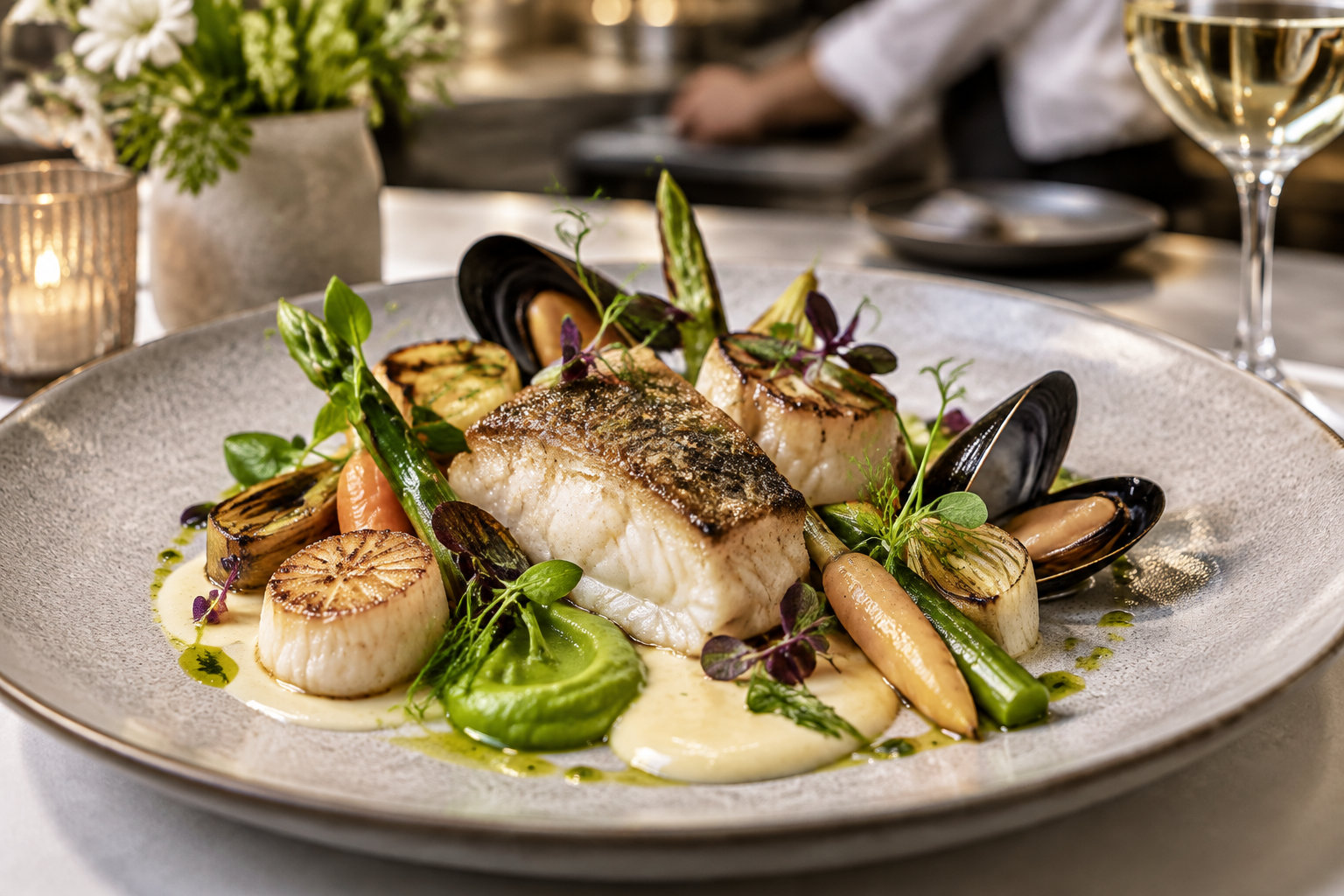
Vous voulez reconnaître le produit dans l’assiette ? Racines est votre adresse.
La cheffe Virginie Giboire travaille poissons, fruits de mer, légumes de saison et produits locaux. Sa cuisine est française et actuelle. Elle a fait ses classes à Ferrandi, au Grand Véfour, puis au Mandarin Oriental Paris.
Le restaurant possède une étoile Michelin.
Du mardi au vendredi, le menu déjeuner comprend une entrée, un plat et un dessert pour 45 €. Le soir, et le midi du samedi, la carte passe à 75 € pour trois services.
Pour une première visite, le déjeuner en semaine est le plus accessible. Vous goûtez à la cuisine de Racines sans payer le prix du dîner.
Le menu dégustation en six services est proposé à 100 €, midi et soir.
Vous pouvez l’accompagner d’un accord mets et vins à 50 €, ou d’un accord sans alcool à 35 €.
Racines se cache au 4 passage Antoinette-Caillot, à Rennes.
Vous pouvez y venir midi et soir du mardi au vendredi, et le samedi soir. Le samedi midi, le dimanche et le lundi, c’est fermé.
Réservez au 02 99 65 64 21 ou en ligne.
Maison Ronan Kervarrec : deux étoiles et une nuit sur place
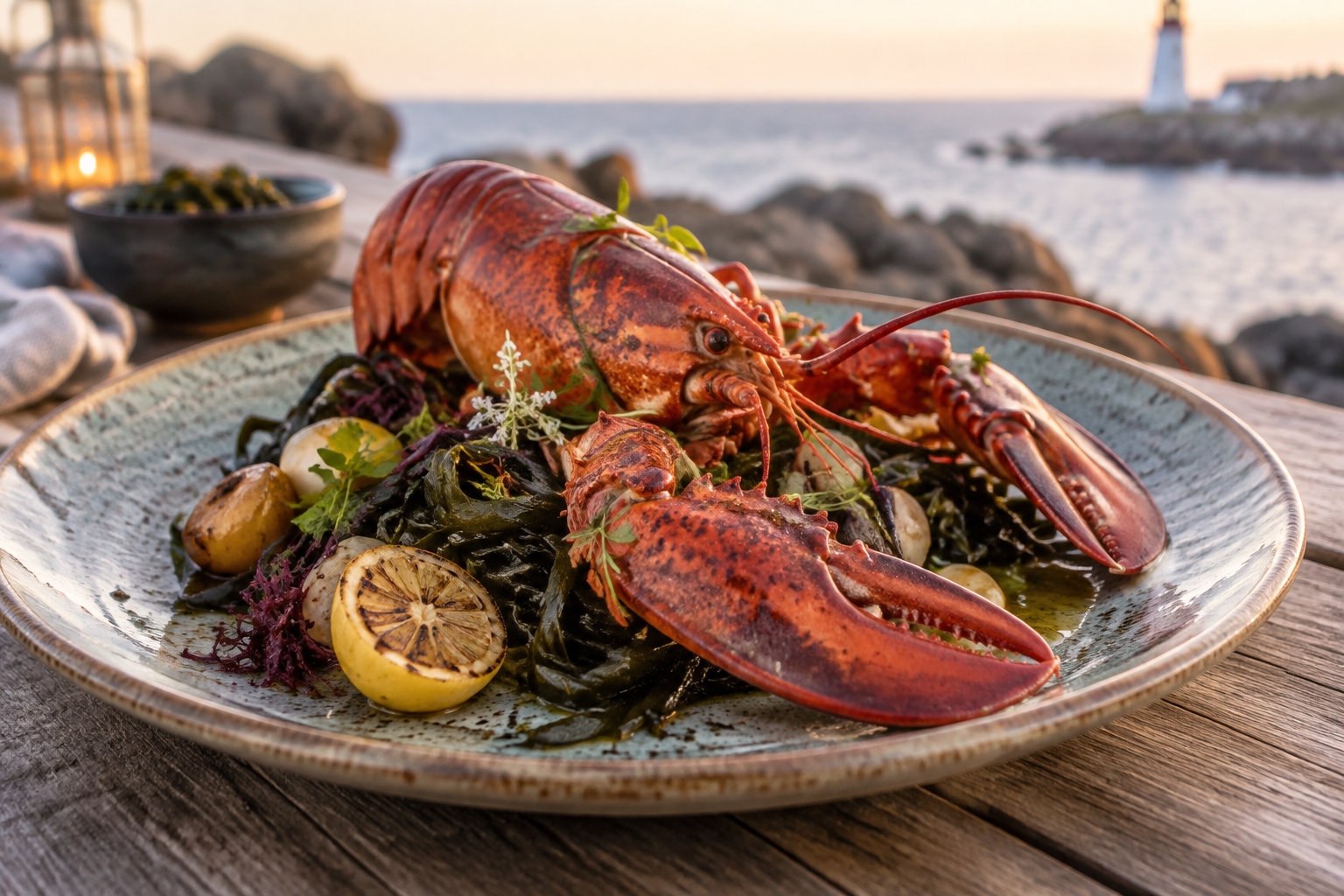
Pour une grande occasion, Maison Ronan Kervarrec domine nettement ce classement. La table de Saint-Grégoire possède deux étoiles Michelin et défend une cuisine bretonne nourrie par les souvenirs d’enfance du chef Ronan Kervarrec. Les produits marins, les algues et le homard y tiennent une place à part.
Des menus de 69 à 280 €
Le menu déjeuner Découverte comprend trois escales pour 69 €. Les menus Souvenirs passent à quatre, cinq ou sept escales, pour 110 €, 145 € ou 205 €. Le menu Prince de l’Océan, entièrement consacré au homard en cinq escales, coûte 280 €. Il se réserve au moins 48 heures à l’avance.
Une adresse proche, avec cinq chambres
La maison se situe au 1 impasse du Vieux Bourg, à Saint-Grégoire, à environ 7 kilomètres au nord de Rennes, soit 10 à 15 minutes en voiture. Un parking privé gratuit vous attend sur place.
Vous voulez prolonger la soirée ? Cinq chambres vous accueillent. Les Standing commencent à 225 € la nuit, les Standing+ à 250 €. Toutes disposent d’un patio privatif, et les secondes ajoutent une baignoire îlot.
Le restaurant ouvre du mardi midi au samedi soir, avec un service de déjeuner de 12 h 15 à 13 h et un service du soir de 19 h 15 à 20 h 30.
Auberge du Pont d’Acigné : une étoile au bord de la Vilaine
Vous voulez quitter Rennes sans partir loin ? L’Auberge est le choix le plus équilibré. Le chef Sylvain Guillemot y cuisine avec instinct, et les producteurs locaux sont à l’honneur.
- Menu Retour du marché : 52 €
- Menu classique : 67 €
- Menu dégustation : 105 €
- Menu découverte : 135 €
Les boissons sont en supplément. Un accord mets et vins est proposé selon la formule.
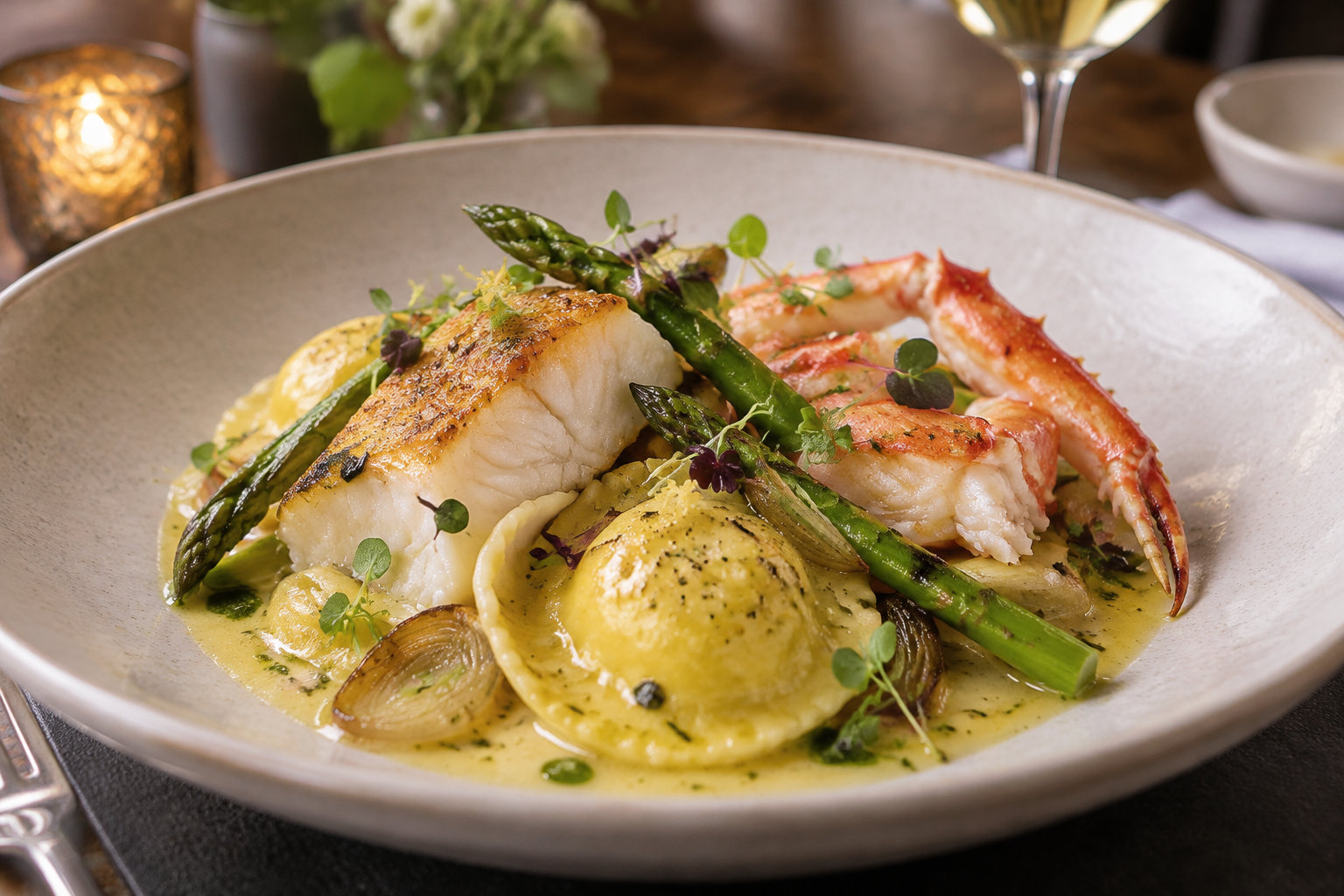
Vous y goûterez le lieu jaune, les asperges, les ravioles d’oignon et l’araignée de mer. La carte change au fil du marché.
Vous trouverez l’adresse au lieu-dit Le Pont d’Acigné, à Noyal-sur-Vilaine, à environ 10 kilomètres de Rennes. L’Auberge ouvre du mercredi au samedi, midi et soir, et le dimanche midi.
La Table des Pères : une étoile au cœur du potager

Vous aimez les tables où le décor prolonge l’assiette ? La Table des Pères est faite pour vous.
Le chef Jérôme Jouadé cuisine avec ce que donnent le potager, le verger, la serre, l’élevage d’escargots et la cueillette sauvage du domaine. Vous goûtez donc le terroir breton, avec une large place pour le végétal.
Deux menus gastronomiques
Deux menus se partagent la carte. Le second est le plus long, et le plus cher.
| Menu Explorer | Menu Flâner | |
|---|---|---|
| Nombre de plats | 6 | 9 |
| Prix du menu | 100 € | 130 € |
| Accord mets et vins | 45 € | 65 € |
Un menu enfant est proposé à 18 € jusqu’à 12 ans. Pratique si vous venez en famille.
Un domaine à 25 minutes de Rennes
Vous trouverez La Table des Pères au Domaine du Château des Pères, route de Boistrudan, à Piré-Chancé. Comptez environ 25 minutes en voiture depuis Rennes.
Le domaine dispose d’un parking. La ligne 14 y mène depuis Rennes, hors week-ends et jours fériés.
Vous réservez en ligne, par courriel à latabledesperes@chateaudesperes.fr ou au 02 23 08 40 80.
Avant de réserver
- Choisir entre le menu Explorer et le menu Flâner
- Prévoir le menu enfant si un enfant de 12 ans ou moins vous accompagne
- Vérifier que votre date tombe un jour d’ouverture
- Prévoir la voiture si la ligne 14 ne circule pas ce jour-là
- Réserver en ligne, par courriel ou par téléphone
Pour un dîner dans Rennes, réservez sans attendre chez Ima ou chez Racines, en tenant compte de leurs horaires serrés. Pour une grande occasion, prenez la route de Saint-Grégoire et réservez le menu Prince de l’Océan au moins 48 heures à l’avance. Avant de partir, un petit tour dans le centre historique ne fera pas de mal, à l’image de ce que propose Visiter Rennes en 2 jours : l’itinéraire idéal.
Foire aux questions
Peut-on offrir un repas gastronomique autour de Rennes ?
Oui, l’Auberge du Pont d’Acigné vend des coffrets cadeaux. Le plus simple, un déjeuner en quatre services avec deux verres de vin et une boisson chaude, coûte 144 € pour deux personnes. Les autres coffrets proposent six ou sept services, avec des accords de boissons plus complets.
Les menus changent-ils souvent ?
Oui, mais le rythme dépend de l’adresse. La Table des Pères change son menu chaque semaine selon les récoltes. Racines renouvelle régulièrement sa carte courte, et Maison Ronan Kervarrec fait évoluer ses menus au fil des saisons.
Peut-on réserver une grande table chez Maison Ronan Kervarrec ?
Oui, à partir de six personnes, la maison sert un menu unique à toute la table. Choisissez donc la formule à l’avance, puis vérifiez les conditions au moment de réserver.